
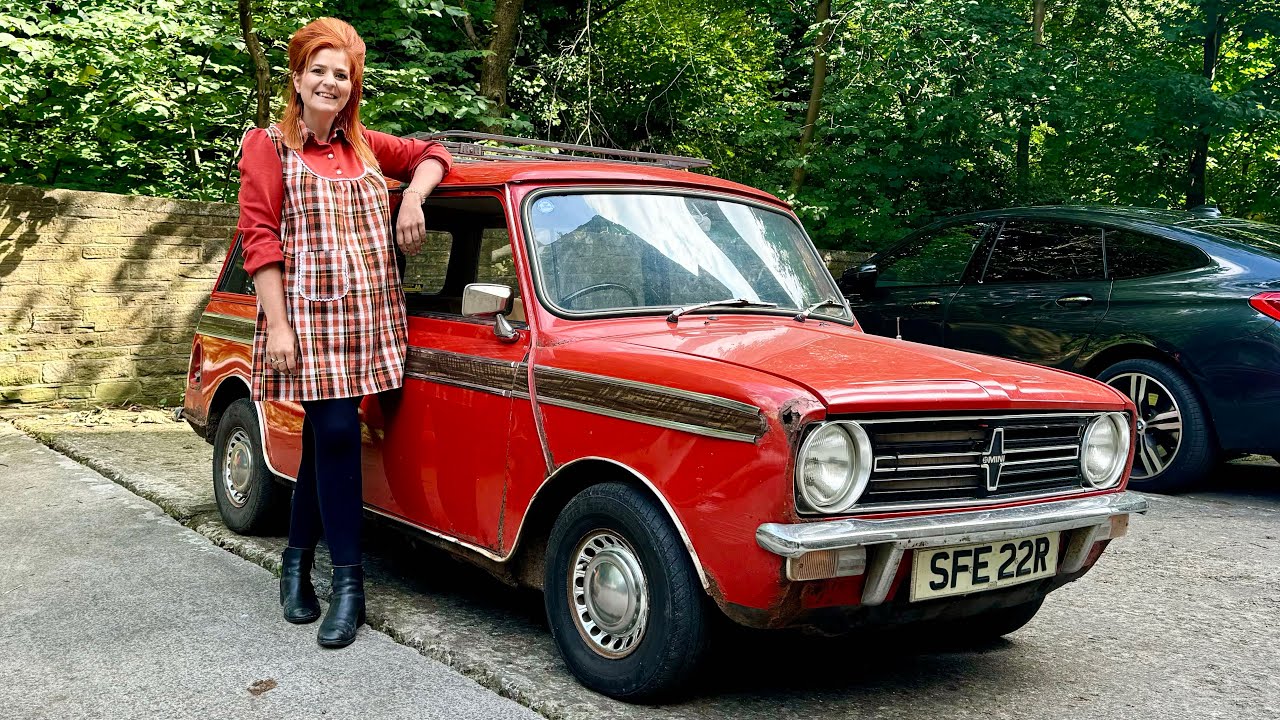
The modern MINI Clubman has been awarded the accolade of Dog Friendly Car Of The Year, but the modern Clubman isn’t where the story began. The story of the Mini Clubman begins in 1967, nearly a decade after the launch of the original Mini saloon.
In a previous blog post we discussed the runaway success of the Mini and the enviable sales and worldwide adoration. However, there was a catch, British Motor Corporation had costed the car quite badly and it left them with a quandary: huge sales with minimal profits for the company.
To try and solve the problem, BMC’s Managing Director Joe Edwards decided he needed some outside help to bring some new wisdom to the situation. This led to the hiring of Roy Haynes. If you’re familiar with the name but aren’t sure where you’ve heard it; he was a key player on the Ford Cortina MK2 and was involved in the design of the Morris Marina.
Bringing a fresh perspective to BMC
Haynes was a realist and he saw a car in a much wider context: he recognised that the purchase of a new car held significance, being the second most expensive item somebody would purchase in their lifetime after their home. He also had a grasp for public desires; comprehending the public appetite for clean styling, functionality and a car which feels exciting and update to date with modern trends and tastes.
The team at BMC were joined by ex-Ford employees Harris Mann and Paul Hughes, both bringing a younger take on vehicle styling, ticking the box for creating cars which met the modern consumer’s tastes.
Roy recognised the range was bloated: there were cars like the various ADOs badged for each brand competing with each other and he realised that to streamline the range would be to improve productivity and outgoings.
His plan was noble: cut the range down to five basic platforms and do away with badge engineering. This mission was to encompass the styling of new models and restyling of existing models including the Austin Maxi and the revised ADO16, which didn’t get put into production.
Devising the Mini Clubman
But where did this come in for the humble Mini and how did we end up with the Mini Clubman?
The range around the Mini was complicated: there wasn’t just the Mini but also the Riley Elf and Wolseley Hornet. They might’ve been top range choices, but they didn’t fall into the vision held by Haynes for a simplified line up.
Haynes decided the best route was to create a model which would replace both the Elf and Hornet, albeit with lower production costs. He had also hoped to increase the sales figures, because the two models were only selling at a rate of 125 a week; barely a squeak compared to the buoyant Mini sales figures.
Haynes and his team assigned the new Mini a development code of ADO20 and created a design with a longer nose to bring it in line design wise with the Austin Maxi.
You might be wondering why the rear end wasn’t also extensively redesigned. Interestingly, Haynes had come up with a plan but the management who controlled how much money went into the venture put a stop to that plan rather swiftly.
In fact, there are photos out there of the concepts and the boot area shows a larger, more bulbous finish. Perhaps to give the Elf and Hornet owner that feeling of boot space. It looks almost Marina Coupe-ish, but it was the same team as the Marina, so the visual similarities should come as no surprise.
The photos of the concepts which circulate indicate a hatchback is toyed with to complete the update of the car. BLMC management were firm in their belief that hatchbacks weren’t something the British public were seeking and rejected the idea; not just for the Mini but other newcomers like the Allegro and Princess.
However, it’s worth noting the rise and rise of the Euro Supermini during the 70s and 80s with their useful hatchbacks throws cold water on the assumptions made about the British public.
The revised interior was a design conceived by Paul Hughes; with the instrument binnacle being something many Mini owners current and past will recognise. It was used in the cars until 2000.
After much trouble and strife at the company including changes of management, names and locations it was finally time to launch the Mini Clubman in 1969, although the sales really went into full swing from 1970 onwards.